Much UVC Light: A Game-Changer in the Battle Versus Airborne Pathogens
In the ever-evolving battle versus air-borne pathogens, the introduction of much UVC light has stimulated substantial interest and capacity. What specifically is far UVC light, and how does it function?
The Scientific Research Behind Far UVC Light
The scientific principles underlying the use of Far UVC light as a prospective remedy for combating air-borne pathogens are both elaborate and promising. Far UVC light describes a specific series of ultraviolet (UV) light wavelengths, generally in between 207 and 222 nanometers, which have actually been found to properly eliminate or suspend microorganisms such as viruses and microorganisms. Unlike conventional UVC light, which has a shorter wavelength and is known for its germicidal buildings yet can likewise damage human skin and eyes, Far UVC light has actually been revealed to be secure for human exposure.
The key device behind the efficiency of Far UVC light depend on its ability to permeate and destroy the genetic product of microorganisms, including their DNA and RNA. When exposed to Far UVC light, the hereditary product undertakes a procedure called photodimerization, where adjacent bases in the DNA or RNA particle bind with each other, stopping duplication and providing the bacterium unable to trigger or replicate infection.
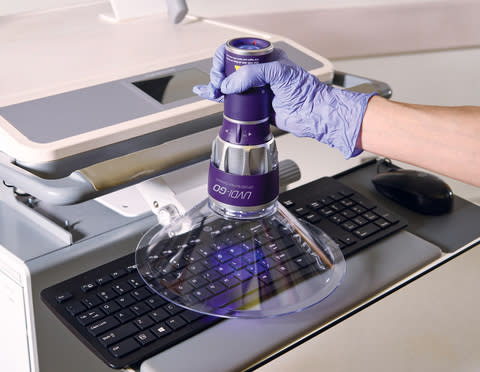
Exactly How Much UVC Light Functions
Far UVC light operates by utilizing details ultraviolet wavelengths to properly reduce the effects of microbes and avoid their replication, making it a promising option for combating air-borne pathogens. Unlike traditional UVC light, which is hazardous to human skin and eyes, much UVC light has much shorter wavelengths, generally in the series of 207 to 222 nanometers (nm), that do not permeate the outer layer of the skin or the tear layer of the eye. This makes it safe for constant human direct exposure, while still being deadly to microorganisms and infections.
The performance of much UVC light lies in its capacity to penetrate and damage the DNA and RNA of microbes. When subjected to much UVC light, the hereditary material of these microorganisms is harmed, making them not able to reproduce and infect cells. Furthermore, studies have actually shown that much UVC light can efficiently suspend air-borne viruses, such as influenza, measles, and coronaviruses, including SARS-CoV-2, the infection accountable for COVID-19.
Additionally, much UVC light is additionally efficient in disinfecting surface areas and things in an encased room. By mounting much UVC lights or making use of mobile much UVC light devices, it is feasible to constantly decontaminate the air and surface areas, decreasing the risk of air-borne transmission of pathogens.

Benefits of Far UVC Light
Making use of far UVC light deals a range of considerable advantages in combating air-borne microorganisms and making certain a safer environment for constant human direct exposure. Among the key benefits of much UVC light is its capability to efficiently reduce the effects of various kinds of harmful microorganisms, infections, and fungi without creating harm to human beings. Unlike standard UV light, which can be damaging to human skin and eyes, much UVC light has a shorter wavelength that allows it to target and damage pathogens while posturing minimal threat to human health and wellness.

Furthermore, far UVC light is much safer for the environment compared to conventional disinfection techniques. Chemical disinfectants commonly contain dangerous ingredients that can have unfavorable impacts on the setting. Far UVC light, on the various other hand, does not produce any type of harmful byproducts or residues, making it an extra environmentally friendly and lasting remedy.
Applications of Far UVC Light
Far UVC light has shown to be effective in eliminating air-borne microorganisms such as fungis, germs, and viruses. Unlike conventional UV light, far UVC light is safe for human direct exposure, making it suitable for constant usage in public rooms such as institutions, workplaces, and hospitals.
An additional application of much UVC light remains in the medical care industry. It can be made use of to disinfect health center spaces, operating movie theaters, and medical devices, minimizing the danger of healthcare-associated infections. Additionally, far UVC light can be integrated into a/c systems to detoxify the air distributing in buildings, providing an added layer of defense versus airborne pathogens.
Additionally, much UVC light can be made use of in the food industry to stop foodborne diseases. It can be used to decontaminate food processing facilities, killing bacteria and various other microbes that may contaminate foodstuff.
Future Ramifications of Far UVC Light
The possible future applications of much UVC light are vast and hold pledge for various industries and markets. Healthcare facilities and clinics might make use of much UVC light to decontaminate patient rooms, running movie theaters, and waiting locations, lowering the threat of healthcare-associated infections.
Additionally, making use of far UVC light in public areas such as airport terminals, train stations, and buying malls could aid manage the spread of air-borne pathogens. By constantly decontaminating these areas, the threat of transmission can be significantly lowered, giving a more secure setting for individuals.
Another prospective application of much UVC light remains in the food industry. Much UVC light might be utilized to disinfect cooking surfaces, product packaging products, and storage space areas. This can aid protect against the contamination of food and reduce the event of foodborne illnesses.
Furthermore, far UVC light can be utilized in cooling and heating systems to disinfect the air circulating try this in buildings. This can be particularly click to read helpful in crowded areas such as theaters, offices, and colleges, where the threat of air-borne transmission is higher.
Conclusion
In verdict, far UVC light has arised as a game-changer in the fight versus air-borne pathogens. From public spaces to healthcare settings, much UVC light deals many benefits in decreasing the transmission of conditions.
Far UVC light refers to a particular variety of ultraviolet (UV) light wavelengths, commonly between 207 and 222 nanometers, which have been discovered to successfully eliminate or suspend microorganisms such as bacteria and viruses. far-uvc. Unlike traditional UVC light, which has a shorter wavelength and is known for its germicidal homes yet can also harm human skin and eyes, Far UVC light has been revealed to be secure for human exposure
Unlike traditional UVC light, which is hazardous to human skin and eyes, much UVC light has much shorter wavelengths, typically in the variety of 207 to 222 nanometers (nm), that do not pass through the external layer of the skin or the tear layer of the eye. Unlike traditional UV light, which can be dangerous to human skin and eyes, much UVC light has a shorter wavelength that allows it to target and ruin microorganisms while posing very little danger to human health and wellness.
Unlike standard UV light, much UVC light is safe for human exposure, making it ideal for continuous use great post to read in public rooms such as offices, colleges, and hospitals.